


Snow Moon Ritual and Spiritual Meaning: A Guide to the Returning Light
Updated: Feb 28

Snow Moon Ritual and Spiritual Meaning: A Guide to the Returning Light
Welcome back to my Moon Magick Series. In today’s blog post, we are going to discuss the transformative power of February’s moon, the Snow Moon. Sometimes called the Hunger Moon, Ice Moon, or Storm Moon, this February full moon carries the quiet weight of late winter and the patience it demands. The Snow Moon rises each February as a quiet yet powerful celestial event, illuminating the night sky with a softer, steadier glow. Known as the Full Snow Moon or February’s Full Moon, it often appears during periods of heavy snowfall, when the earth is hushed and the world feels suspended between stillness and change.
This midwinter moon, sometimes called the Hunger Moon or Ice Moon, reflects a time when resources were once scarce and survival depended on patience, community, and care. Under the moon’s light, the season invites self-reflection, deep breaths, and an honest look at what has carried us through winter so far. It arrives in the season of Imbolc on the Wheel of the Year, a liminal threshold that honors endurance, quiet tending, and the first subtle signs of life returning beneath the surface.
Today, we’re exploring the spiritual meaning of this February moon. We’ll look at where the Snow Moon sits within the season, the energy it carries, and how to work with it through a simple, grounded Snow Moon ritual that honors rest, release, and the slow return of light.
The Snow Moon is not about rushing toward spring, but about recognizing that the returning light has already begun; quietly, subtly, and in its own time. As the February Snow Moon, this full moon sits within the ongoing lunar cycle, reminding us that change unfolds gradually even as the days lengthen and the sun lingers a little longer.
Table of Contents
The Snow Moon and Its Spiritual Meaning
February’s Full Moon is traditionally called the Snow Moon by Native American tribes due to the heavy snowfall that often blankets the ground during this month in the United States.
The spiritual meaning of the Snow Moon centers on endurance, inner clarity, and trust in slow transformation. This is a moon that honors what lasts — what has remained steady even when conditions were harsh. While we are still in the winter season, the returning of light provides hope for change and new beginnings.
As part of the ongoing lunar cycle, the Snow Moon reminds us that growth doesn’t always look like movement. Sometimes growth looks like resting, conserving energy, and listening more deeply. This is a powerful moment for spiritual growth, especially when approached with humility and patience. On the lunar calendar, the Snow Moon arrives after the deepest stillness of winter, offering insight that often becomes clearer as the moon shifts from full into its waning moon phase.
Historically, this moon marked a time when people relied on stored food and careful planning. Spiritually, it invites us to ask: What no longer serves me as I move forward? What deserves my care as the seasons begin to shift?
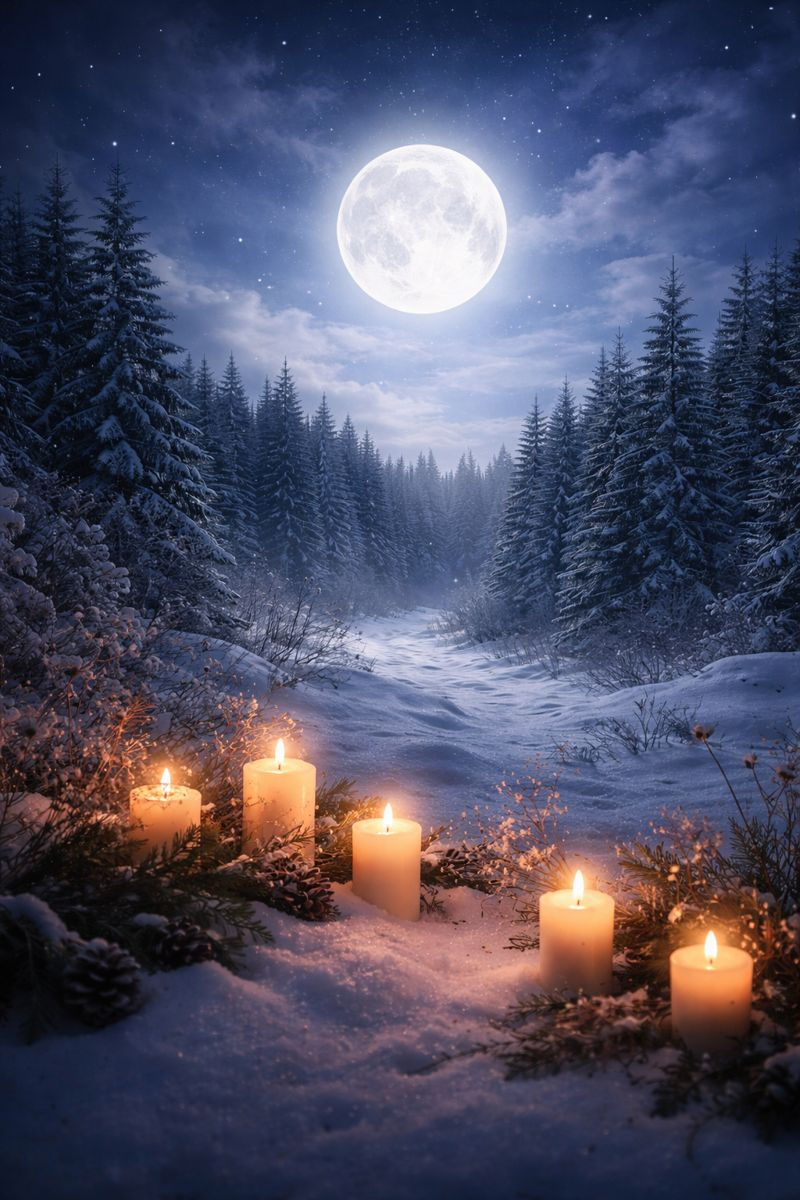
The Energy of the Snow Moon
The energy of the Snow Moon is calm, reflective, and grounding — not because the world is frozen everywhere, but because this point in the seasonal cycle asks for steadiness rather than expansion. Under the Snow Moon, the earth feels dormant but alive beneath the surface.
I tend to enjoy this time of year because it’s when I notice myself slowly “waking up” after a deeply reflective season. There’s a subtle return of energy as the days grow longer — not enough to leap forward, but enough to feel the first stirrings of momentum.
I’ve learned, though, that this isn’t the time to rush. When I move too quickly here, it often leads to burnout later. The Snow Moon reminds me to honor the feeling of being awake again without forcing productivity and to let energy return naturally after a season of rest, rather than demanding it arrive all at once.
I experience this shift internally first, before it shows up clearly in the world around me.
Here in places like Southern California, February doesn’t look like snowdrifts or frozen ground. It looks like cool evenings, softer light, longer afternoons, and a quiet sense that something is beginning to shift. The land hasn’t burst into growth yet, but it’s no longer fully at rest either. This subtle in-between is exactly what the Snow Moon reflects.
Arriving near Imbolc on the Wheel of the Year, this moon marks a threshold — not the arrival of spring, but the awareness that winter is no longer static. The light is increasing, even if the season hasn’t changed its tone yet. This is a time for attunement, not activation.
To work with this energy, focus on regulation rather than ignition. Let warmth support your nervous system. Let breath slow your body. Let candlelight serve as a point of presence — not to initiate change, but to help you stay with what is quietly unfolding. This is not a moment for bold action or sweeping declarations. It’s a moment for noticing what is stabilizing, what is loosening, and what no longer needs to be held so tightly.
The Snow Moon teaches discernment: how to honor movement without forcing momentum, how to prepare for growth without rushing toward it. Nature reminds us that before anything breaks the surface, it first reorganizes below it — and that this unseen work is just as real as what comes next.
Snow Moon Themes to Work With
Themes often associated with the Snow Moon include:
releasing what no longer serves
conserving energy
cultivating patience
honoring rest
preparing for fresh beginnings
trusting subtle new beginnings
As Ostara and the spring equinox approaches, this moon helps us clear space internally so we’re ready to respond when momentum naturally returns.
Snow Moon Correspondences & February Full Moon Magick
Traditional moon correspondences for the Snow Moon emphasize cleansing and clarity.
These February Full Moon correspondences support quiet ritual work rather than high-energy spellcraft. Remember, these are simply suggestions — your ritual and intentions are just as powerful whether or not you use these exact items.
Snow Moon Crystals & Their Magickal Correspondences
Crystals associated with the Snow Moon support clarity, steadiness, and gentle energetic cleansing. These stones work quietly, helping you hold space rather than push for outcomes ideal for a February Full Moon ritual.
Clear Quartz — clarity, amplification, and spiritual alignment; helps bring focus to intentions without forcing them
Moonstone — emotional balance, intuition, and connection to the lunar cycle; supports inner listening during winter
Selenite — cleansing, energetic reset, and clarity; especially supportive for releasing lingering winter heaviness
Smoky Quartz — grounding and transmutation; helps move negative energies gently back into the earth
Snowflake Obsidian — balance, reflection, and integration; mirrors the Snow Moon’s lesson of finding stillness within contrast
These stones can be held during ritual, placed near a white candle, or kept nearby as the moon moves into its waning phase.
Snow Moon Herbs & Their Magickal Correspondences
Herbs connected to the Snow Moon tend to focus on purification, protection, and quiet strength — aligning with the season’s slower pace and the need to conserve energy.
Rosemary — clarity, remembrance, and spiritual cleansing; ideal for releasing mental fog
Bay Leaf — protection, intention setting, and gentle manifestation; best used sparingly during winter rituals
Mugwort — intuition, dreams, and inner vision; supports reflection rather than action
Sage — purification and energetic clearing; use thoughtfully and respectfully, especially in closed winter spaces
Juniper — protection, resilience, and grounding; traditionally associated with winter survival and endurance
Herbs can be burned (where appropriate), steeped as ritual tea, or placed on an altar to support Snow Moon work without overstimulation. For deeper herbal correspondences, you can explore my guide to witchcraft herbs and their magickal properties for year-round ritual support.

An Easy Snow Full Moon Release Ritual (Step by Step)
Releasing rituals are especially powerful during the Snow Moon, as we prepare ourselves for the season of spring ahead. Set up your sacred space, and let’s begin.
Snow Moon Ritual Supplies
A white candle (for illumination and focus)
Bay leaves (for release and transformation)
A small piece of paper and pen
Clear quartz or another crystal or meaningful token
A fire-safe bowl or cauldron
Matches or a lighter
Because this is a February full moon, the focus of this ritual is release and integration, allowing insight to settle as the moon begins to wane toward the next new moon, rather than initiating something new. Begin by acknowledging the full moon overhead, whether you can see it in the night sky or sense it intuitively. Sit in a comfortable space, place your feet on the earth (or imagine the ground beneath you), and take several deep breaths to settle your body.
On a small piece of paper, write down what no longer serves you: habits, fears, expectations, or patterns that helped you survive winter but now feel restrictive. Consider what has kept you safe but also kept you small, what has lingered out of comfort rather than truth, and what might prevent you from growing as spring approaches. Write honestly, without judgment, and let the act of naming be enough.
Take one or two bay leaves and write a word or phrase on each representing what you are letting go of. Hold them briefly, then safely burn the bay leaves and your paper together, watching as fire transforms what you release.
As they burn, speak:
Under this Snow Moon, steady and bright,
I release what no longer belongs in my life.
By earth and fire, by breath and flame,
What I release is free to change.
When the ashes cool, hold clear quartz (or a crystal or token of your choice) and gently set intentions for the coming weeks and months — not bold moves, but embodying a quiet readiness that prepares you for what’s ahead.
Close by thanking the moon, your spirit guides, and yourself for honoring this moment of stillness.
Snow Moon Journal Prompts
Journaling is a transformative way to tap into the energy of the Snow Moon, and I always encourage jotting down at least a paragraph or two to help you connect with the energy you’ve just built. Here are a few prompts if you’re feeling unsure where to begin:
What has sustained me through this season of winter?
Where am I being asked to slow down?
What kind of light am I learning to trust?
What am I quietly preparing for as spring approaches?
These reflections support self-discovery and integration.
Closing Thoughts
The Snow Moon does not rush transformation. It witnesses it. This Full Snow Moon reminds us that life continues beneath the surface, just as bear cubs stir in their dens and the earth prepares for the seasons ahead.
As the waning moon carries us toward the next new moon, allow the insights from this Snow Moon to settle before taking action, trusting that what begins quietly now will unfold through the crescent moon, first quarter, and eventually the next full moon.
Nothing needs to bloom yet. You’re moving with the season, and that is enough.
As winter begins to loosen its grip, the next chapter of the lunar cycle arrives with the Worm Moon, the March full moon that reflects thawing ground, early movement, and the first signs of spring returning. You can explore its meaning and ritual in my Worm Moon Spiritual Meaning and Ritual guide.
Snow Moon FAQ
What is the Snow Moon?
The Snow Moon is the traditional name for February’s full moon, commonly associated with late winter conditions, endurance, and seasonal stillness.
What is the spiritual meaning of the Snow Moon?
The spiritual meaning of the Snow Moon centers on patience, reflection, and quiet preparation. It invites release of what no longer serves and encourages honoring rest as the light slowly returns.
Why is it called the Hunger Moon?
The Snow Moon is sometimes called the Hunger Moon because, historically, February was a time when food stores were low and survival required conservation, planning, and community support.
Is the Snow Moon connected to Imbolc?
Yes. The Snow Moon often falls near Imbolc on the Wheel of the Year, a liminal seasonal threshold that honors endurance, quiet tending, and the earliest signs of life returning beneath the surface.
Is the Snow Moon the same as the First Flower Moon?
The term First Flower Moon is sometimes used symbolically for the February full moon to reference the earliest stirrings of life beneath the surface, not visible blooms. The traditional Flower Moon is associated with May.
What kind of ritual is best for the Snow Moon?
Snow Moon rituals are best focused on release, reflection, and integration, rather than manifestation or initiation. This is a full moon that supports letting go and preparing for what will emerge later in the season.
Should I do a New Moon ritual during the Snow Moon?
The Snow Moon is a full moon, so ritual work is more aligned with release and awareness. New Moon rituals are better saved for the next lunar phase, after insights from the Snow Moon have settled.


Comments